





How to Choose an LED Work Light
Nov 12, 2026
Leave a message

Navigating a multitude of specifications can be confusing. The following key considerations will help you select the light that best meets your needs.
1. Brightness and Light Source Type
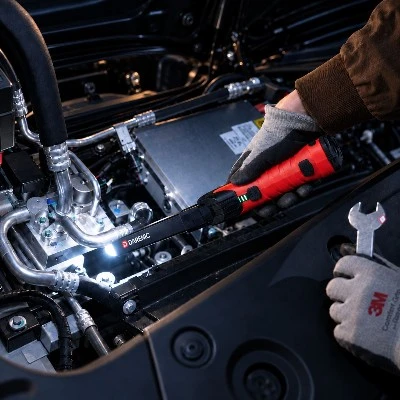
Brightness is measured in lumens. For close-up, detailed tasks like engine repair or wiring, an output of 300–500 lumens is usually sufficient. If you need to illuminate a larger area-such as a room during a power outage or a campsite-you might want to look for a model offering close to 1,000 lumens.
Many modern lights utilize COB (Chip on Board) technology. A portable COB work light packages multiple LED chips into a single module, producing a broad, uniform beam. This is ideal for illuminating an entire workspace without creating harsh shadows or hotspots-unlike traditional flashlights, which cast a more focused beam suited for long-distance viewing.
2. Hands-Free Design
A major advantage of a good work light is the ability to use it without holding it. Look for features that allow for flexible placement:
Magnetic Base: Strong magnets allow the light to attach to any ferrous metal surface, such as a car hood, fuse box, or steel shelving unit. This makes rechargeable magnetic lights indispensable tools for mechanics and electricians.
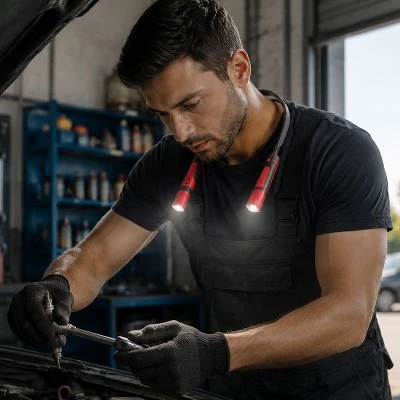
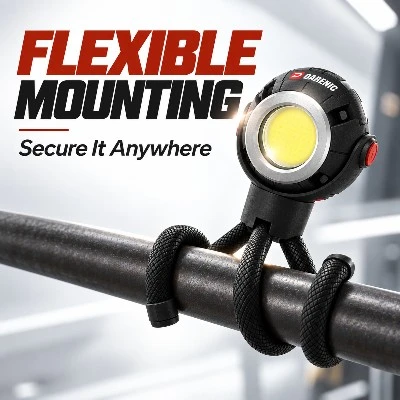
Hooks and Clips: Built-in hooks let you hang the light from pipes, rafters, or tent poles. A sturdy clip-on light can attach to a pocket, belt, or the brim of a hat, making it an excellent hands-free inspection light.
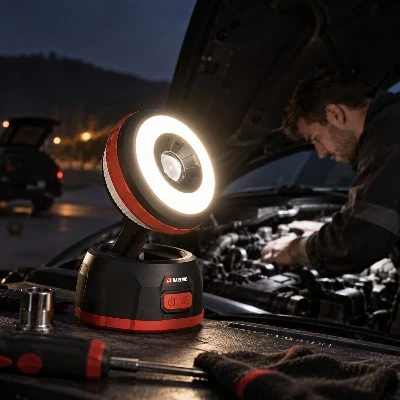
Rotating Head: A head that tilts or rotates allows you to precisely adjust the beam direction, ensuring the light falls exactly where it is needed most.
3. Power Source and Durability
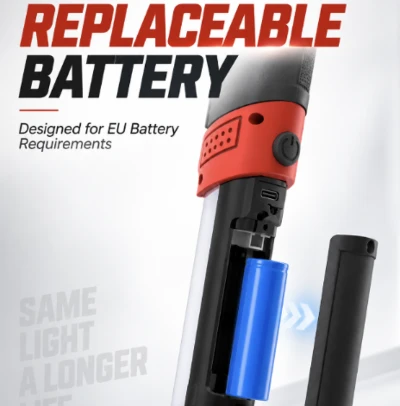
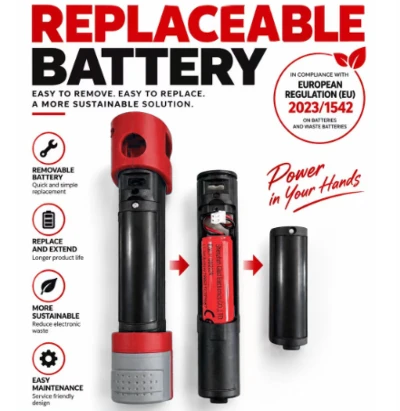
Consider where and how you plan to use your light. For frequent daily use, rechargeable models that support USB-C charging are both convenient and cost-effective. However, for use as an emergency car light or a backup camping light, models powered by standard AA or AAA batteries may be more reliable; you simply need to carry spare batteries rather than searching for a power source to recharge.
Finally, check the IP (Ingress Protection) rating. An IPX4 rating indicates the light can withstand splashes from any direction, making it suitable for outdoor use in the rain, while a higher IPX6 rating offers protection against powerful water jets.
Send Inquiry