


China Customized Auto Tire Air Pump: An OEM Buyer’s Guide
Jul 20, 2026
Leave a message
For automotive importers, distributors, brand owners, and OEM buyers


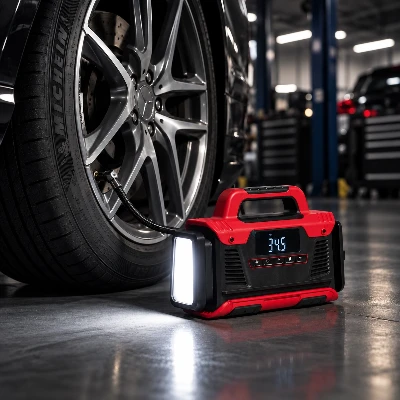
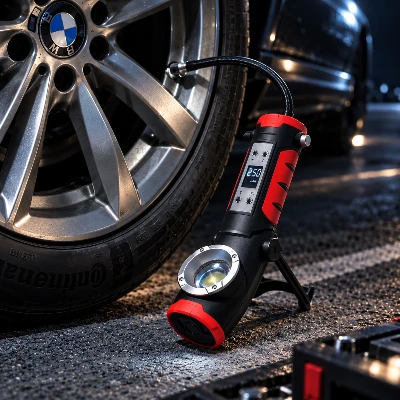
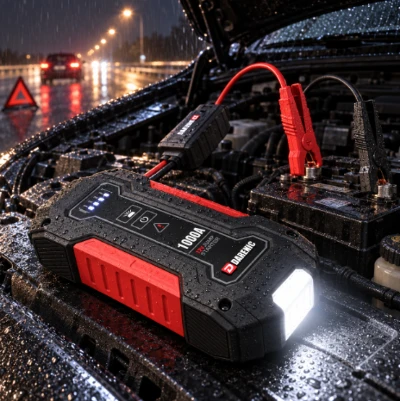
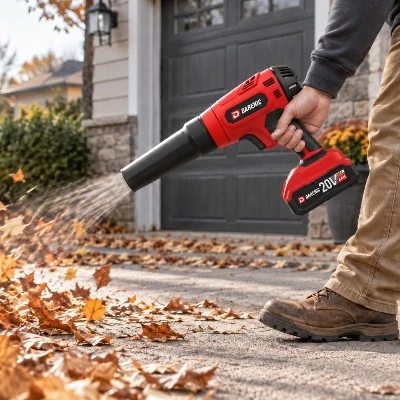
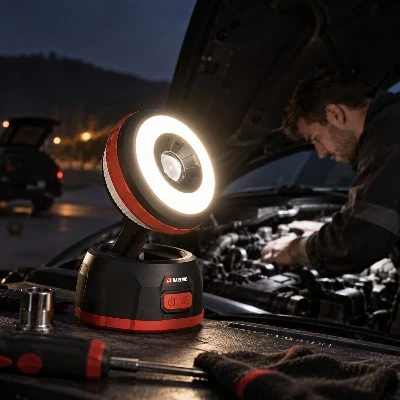
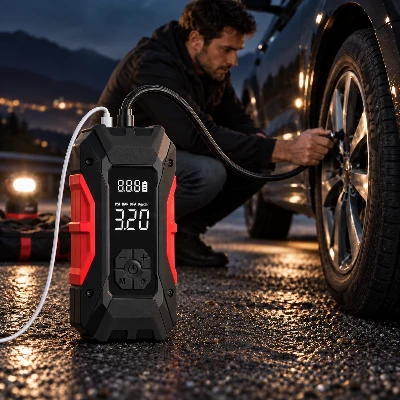
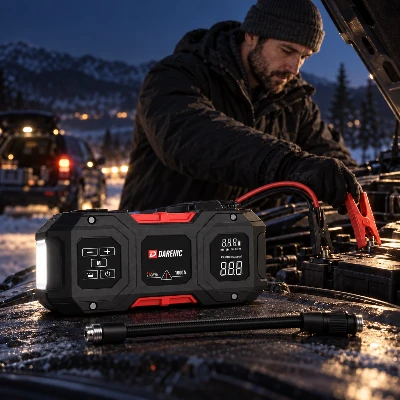
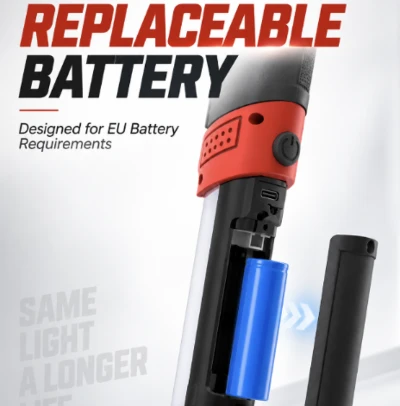
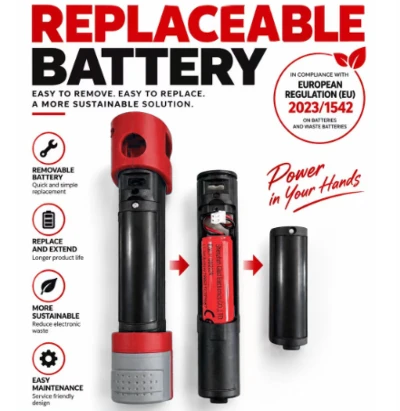
Two Daren air pump platforms: a heavy-duty digital tire inflator and a portable wireless inflator with work-light functions.
For automotive importers, distributors, and brand owners, sourcing a tire inflator involves more than comparing pressure ratings and unit prices. Product reliability, customization feasibility, quality consistency, lead times, and supplier communication all affect the long-term success of the program.
A suitable China customized auto tire air pump supplier should be able to support the complete OEM process-from requirement evaluation and sample development to mass production, inspection, and packaging.
Daren is a China-based manufacturer with more than 20 years of experience in work lights and air pumps. We provide OEM and ODM solutions for automotive product companies seeking customized products manufactured in China.
Why Buyers Source Customized Auto Tire Air Pumps from China
China has an established supply chain for automotive electronics, plastic components, motors, air hoses, pressure gauges, cables, batteries, packaging, and related accessories. This manufacturing ecosystem can support both standard private-label products and more extensively customized tire inflator projects.
For B2B buyers, the main advantages are not limited to product cost. A qualified Chinese manufacturer can also provide:
- Existing product platforms that reduce development time
- OEM branding and packaging options
- Product configuration flexibility
- Accessory and kit customization
- Engineering support for new product development
- Scalable production for repeat orders
- Coordinated quality control during manufacturing
However, supplier capabilities vary considerably. Buyers should assess whether a factory has relevant manufacturing experience, documented production controls, and a clear customization process before placing an order.
To understand Daren's manufacturing background and experience, visit our About Us page.
What Can Be Customized on an Auto Tire Air Pump?
The customization scope depends on the selected product platform, target market, order quantity, and technical requirements. Some projects require only a logo and color box, while others involve changes to product structure, performance, accessories, or electronic functions.
Exterior Design and Branding
Common exterior customization options may include:
- Customer logo printing
- Customized product colors
- Surface texture or finish
- Label and rating-plate design
- Button and control-panel layout
- Housing modifications
- Customized industrial design for ODM projects
Using an existing housing generally requires less development time and a lower project commitment than creating a completely new enclosure. New housing designs may require mold development, engineering validation, and additional sample testing.


Different product platforms support different housing, control, power, and accessory configurations.
Performance Configuration
Depending on the model, buyers may request adjustments to technical parameters such as:
- Maximum pressure
- Airflow
- Inflation speed
- Motor configuration
- Power supply
- Cable length
- Air hose length
- Pressure-unit display
- Automatic shut-off settings
- Digital or analog pressure display
Technical requirements should be defined according to the intended application. A compact emergency inflator for passenger cars may have different performance priorities from a product intended for SUVs, pickups, or frequent workshop use.
Buyers should avoid specifying only a maximum pressure value. Airflow, duty cycle, heat management, inflation time, pressure accuracy, and operating conditions are also important when evaluating performance.

OEM performance requirements should be defined as a complete specification, not a single pressure value.
Power and Charging Options
Auto tire air pumps can be developed around different power configurations, including:
- 12V vehicle power connection
- Rechargeable battery
- USB charging
- Multiple power-input options
- Customer-specified cables or plugs
The appropriate configuration depends on the sales market, product positioning, and intended use. Rechargeable products may require additional discussions about battery capacity, charging time, battery protection, storage conditions, and transportation requirements.
Accessories and Product Kits
Accessories can help distributors create different product versions for separate sales channels. Depending on the air pump design, a customized kit may include:
- Inflation nozzles
- Ball needles
- Spare fuses
- Air hoses
- Power cables
- Storage bags
- Carrying cases
- Emergency tools
- Work-light functions
- Customer-selected adapters
Accessory requirements should be confirmed during the quotation stage. Even a small accessory can affect packaging dimensions, assembly time, sourcing lead time, and total product cost.

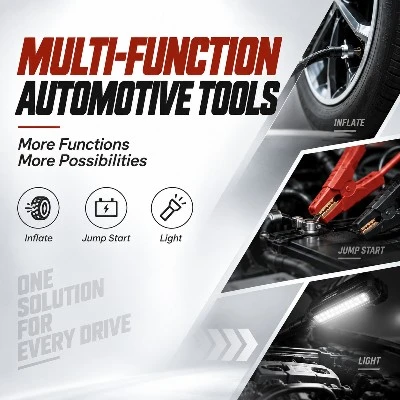
A multifunction air pump platform shown with hose, nozzles, 12V cable, and USB-C charging cable.
Retail and Shipping Packaging
Packaging customization can include printed color boxes, neutral or private-label cartons, instruction manuals, warning labels, product inserts, protective internal packaging, master cartons, barcodes, and shipping labels.
Buyers should provide final artwork in the required format and confirm language, barcode, regulatory markings, carton dimensions, and shipping marks before production. Packaging should be considered early because printed materials and custom inserts may have separate minimum order requirements.
For more information about available customization routes, visit our OEM/ODM Service page.
The OEM Customization Process

A six-stage OEM workflow from requirement review to mass production.
A structured development process helps reduce misunderstandings, control revisions, and establish clear approval points.
1. Requirement Review
The buyer should provide a detailed project brief containing:
- Target market and intended application
- Required performance and power configuration
- Preferred product design
- Branding and packaging requirements
- Target order quantity
- Compliance requirements
- Expected delivery schedule
The more complete the brief, the more accurately the manufacturer can assess feasibility, development time, MOQ, and cost.
2. Product Platform Selection
For projects with shorter launch schedules, selecting an existing air pump platform is often the most practical option. The buyer can then customize branding, color, accessories, packaging, and selected functions.
If no existing model meets the requirements, an ODM development path may be considered. ODM projects generally involve more engineering work, additional validation, higher development costs, and a larger production commitment.
Buyers can review available designs on the Air Pump Product Pages before submitting a customized inquiry.


Existing product platforms can shorten development time before OEM branding and configuration changes.
3. Quotation and Project Confirmation
A B2B quotation should clearly define the product model and specification, customization scope, unit price, tooling or development charges, sample charges, MOQ, packaging, payment terms, lead time, quotation validity, and shipping terms.
Buyers should confirm whether one-time development costs are separated from the repeat-order unit price. This makes it easier to evaluate the long-term cost of the program.
4. Sample Development and Approval
Samples allow both parties to confirm appearance, operation, accessories, labels, and packaging before mass production. The approval record should identify the approved specification, color, logo position, functions, cables, hoses, accessories, labels, artwork, and testing requirements.
Any changes requested after sample approval may affect cost and delivery time. A controlled approval process helps prevent differences between the sample and mass-produced goods.
5. Pilot Run or Pre-Production Verification
For a new or significantly customized product, a pilot run can verify assembly procedures, production fixtures, inspection standards, packaging operations, and test methods. A logo-only project on an established model may require less validation than a product with new electronics, housing, or performance parameters.

6. Mass Production and Inspection
After sample approval and material preparation, the project moves into mass production. The supplier should manufacture according to the confirmed specification and agreed quality requirements.
Buyers should establish how production status, inspection findings, and schedule changes will be communicated. Clear reporting is especially important for first orders and time-sensitive launches.
Quality Control for Customized Tire Inflators
Quality control should cover incoming materials, assembly operations, functional testing, packaging, and final inspection. Checking only the external appearance of finished products is not sufficient.

Incoming Material Control
Incoming inspection may cover motors, electronic components, pressure sensors or gauges, plastic housings, cables, connectors, air hoses, batteries, switches, displays, labels, and packaging materials.
In-Process Quality Checks
Production controls may include assembly verification, wiring and connector checks, fastener checks, air-path and hose inspection, display and button-function checks, label-position verification, and workmanship inspection.
Functional Testing
Depending on the product and agreed quality plan, functional testing may evaluate power-on operation, pressure display, automatic shut-off, inflation performance, air leakage, noise, vibration, temperature rise, cable operation, charging, battery functions, and integrated light functions.
Test methods, sample sizes, limits, and acceptance criteria should be agreed before production rather than after a problem occurs.
Final Inspection and Packaging Check
Final inspection should confirm that finished products match the approved sample and purchase specification. It may include appearance, functionality, quantity, accessories, labeling, packaging, and carton-mark checks. Importers may also arrange an independent pre-shipment inspection when required by their internal procedures.

How to Select a China Customized Auto Tire Air Pump Supplier
A low quotation does not necessarily indicate the best sourcing option. Buyers should evaluate the supplier's ability to support the complete product lifecycle.
Relevant Manufacturing Experience
Ask how long the supplier has manufactured air pumps and whether it has experience with similar automotive markets, product configurations, and customization requirements. Relevant experience can help identify technical and production risks before mass production.
Darenic has more than 20 years of manufacturing experience in work lights and air pumps, with OEM and ODM support for automotive product businesses.
Clear OEM and ODM Boundaries
A professional supplier should explain the difference between private labeling, packaging customization, product configuration changes, structural modification, and full ODM development. Each level has different implications for MOQ, cost, tooling, testing, intellectual property, and lead time.
Engineering Communication
Evaluate whether the supplier asks detailed technical questions instead of immediately confirming every request. Careful requirement review is generally a positive sign because it reduces uncertainty before development begins.
Quality Documentation
Depending on the project, buyers may request product specifications, inspection criteria, test reports, sample-approval records, packaging specifications, production inspection records, and corrective-action reports.
Production and Delivery Planning
Ask the supplier to explain material lead times, production scheduling, customization milestones, and factors that could affect delivery. For repeat business, discuss forecasts, reorder lead times, and critical-component availability.
Responsiveness After the First Order
A long-term supplier should support repeat-order consistency, product revisions, packaging updates, quality feedback, replacement-part discussions, new model development, and cost reviews based on volume changes.
Easily Build Your Product Competitiveness
Customized Products Designed for Your Brand
With our in-house design and R&D team, we turn your ideas into real products.
Information to Include in Your RFQ
A detailed request for quotation helps the manufacturer provide a relevant proposal and reduces unnecessary follow-up. Include the following information when possible:
- Product type and intended application
- Target vehicle category
- Required pressure and airflow
- Power supply
- Cable and hose requirements
- Digital or analog display
- Automatic shut-off requirements
- Accessory list
- Logo, color, and packaging requirements
- Target market and compliance requirements
- Estimated first-order quantity and annual forecast
- Target delivery date and shipping destination
If some technical details are not yet finalized, explain the intended market position and use case. The manufacturer can then recommend a suitable existing platform or discuss an ODM development route.

A complete RFQ improves feasibility review and quotation accuracy.
Work with an Experienced China Auto Tire Air Pump Manufacturer

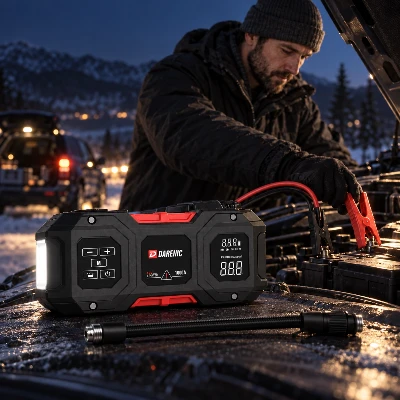
A Daren heavy-duty digital tire inflator in an automotive use scenario.
A successful customized tire inflator project requires coordination between product design, engineering, component sourcing, manufacturing, testing, packaging, and logistics.
Daren provides OEM and ODM solutions for automotive product importers, distributors, and brand owners. With more than 20 years of experience in work lights and air pumps, we support projects based on existing product platforms as well as more extensive customization requirements.
To discuss a China customized auto tire air pump project, review our Air Pump Product Pages, learn more about our OEM/ODM Service, or send your specifications through the Contact Us page.
When contacting us, please include your target market, required functions, customization scope, estimated quantity, and expected launch schedule. This information will help our team evaluate the project and prepare a more accurate response.
Send Inquiry