









How We Prepare Battery QR Codes For EU Imports: A Practical Case
Nov 12, 2026
Leave a message
Under EU Battery Regulation (EU) 2023/1542, all batteries must have a QR code from 18 February 2027.
But how do we actually prepare one for our battery-powered products?
Here is how we work with our battery suppliers to prepare the QR code and product labelling.
The Battery Supplier Prepares an Online Information Page
First, we ask our battery supplier to prepare a webpage containing the required battery information.
There are two common ways to do this:
- Using the supplier's own website: The battery supplier creates a dedicated page on its official website.
- Using a third-party website: The supplier uses an external website service to create and host the information page.
The page should be accessible through a URL and contain the required information for the relevant battery model.

The Supplier Sends Us the URL
Once the webpage is ready, the battery supplier sends us the URL.
We check that the link opens correctly and that the information matches the battery used in our product.
Generate the QR Code
After receiving the URL, we convert it into a QR code.
Depending on the project arrangement, either our team or the battery supplier can generate the QR code.
The QR code links directly to the online battery information page. Users can scan it with a smartphone to access the relevant information.
What Information Does the QR Code Link To?
For batteries covered by the general information requirements, the online page should provide the applicable information listed in Annex VI, Part A of the EU Battery Regulation, including:
- Manufacturer information: Manufacturer's name, address and contact details.
- Battery identification: Battery category, model, batch number or serial number.
- Place of manufacture: Location of the battery manufacturing plant.
- Date of manufacture: Month and year.
- Battery weight.
- Battery capacity.
- Battery chemistry: For example, Lithium-ion or LiFePO4.
- Hazardous substances: Other than mercury, cadmium and lead.
- Usable extinguishing agent: Information about the suitable fire-extinguishing agent.
- Critical raw materials: Materials present at a concentration of more than 0.1% by weight.
The QR code must also provide access to other applicable documents and information, including:
- EU Declaration of Conformity (DoC).
- Information on the prevention and management of waste batteries.
- The battery due diligence report referred to in Article 52(3), where applicable.
Important: EV batteries, LMT batteries and industrial batteries with a capacity greater than 2 kWh have separate Digital Battery Passport requirements. Their QR code must link to the Battery Passport rather than just a general information page.
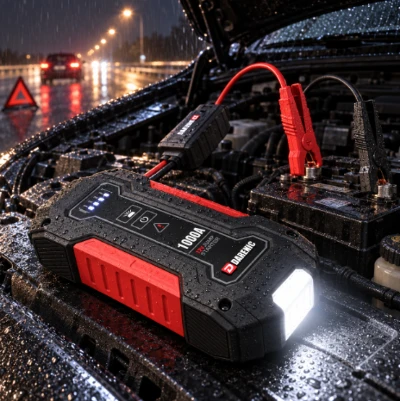
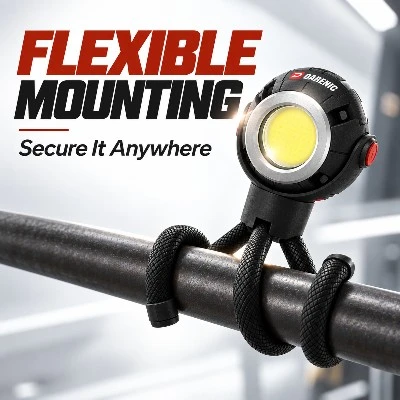
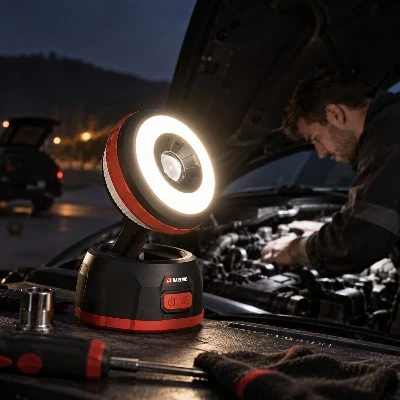
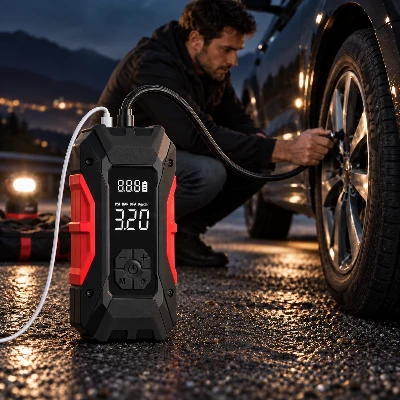
Importing battery-powered work lights, tire inflators or jump starters into the EU?
NEED HELP WITH YOUR BATTERY QR CODE?
We can work with you and the battery supplier to organize the required battery information, coordinate QR code preparation and discuss label and packaging requirements.
Where Should the QR Code Be Placed?
There are two important points to consider when preparing battery labels.
1. QR Code on the Battery or Packaging
The QR code should be printed or engraved visibly, legibly and permanently on the battery. If this is not possible or appropriate because of the battery's size or nature, it should be affixed to the battery packaging and accompanying documents.
2. QR Code on the Battery Pack Nameplate
For battery packs, we also need to consider the battery pack's own nameplate. If there is enough space, the QR code should be included on the battery pack label so users can scan it directly.
Before mass production, we recommend testing the printed QR code to make sure it can be scanned easily and opens the correct information page.
Our Approach: Work Together with Battery Suppliers
Preparing a battery QR code is not just about generating a QR image.
The battery supplier needs to provide accurate technical information and maintain the online information page. The product manufacturer and importer should also coordinate the QR code, label design and required documents.
By working together early, we can make battery information easier to access and help prepare our products for the EU Battery Regulation requirements.
Official reference: Regulation (EU) 2023/1542 – Article 13 and Annex VI
Notice:This article describes our practical preparation process. The exact QR code and Battery Passport requirements depend on the battery category and the applicable EU regulations.
Send Inquiry