

How does a led hand held work light compare to a traditional incandescent work light?
Nov 12, 2026
Leave a message
If you've ever stood in a dim, dusty garage trying to fix a car engine at midnight, or crawled under a workbench on a construction site with a flimsy, flickering light balanced between your teeth, you know how much a good work light matters. For decades, the go-to tool for these jobs was the traditional incandescent hand held work light-those bulky, warm-glow bulbs that get so hot you can barely touch them after 10 minutes of use. But over the last 15 years, LED hand held work lights have taken over the market, and as a supplier of these lights, I've talked to hundreds of tradespeople, DIY enthusiasts, and maintenance workers who swear by the switch. Today, I want to break down exactly how these two types of lights work, why the gap between them is so wide, and why making the shift to LED might be the best call you make for your workday.
Let's start with the basics, because understanding how each light produces light is the foundation of everything else. Incandescent work lights have been around since Thomas Edison's time, and their design is deceptively simple. Inside that glass bulb, there's a thin wire called a tungsten filament. When you plug the light into a power source (or attach it to a battery, though most incandescent work lights are wired), electricity flows through the filament. The resistance of the tungsten wire makes it heat up to around 2,500 degrees Celsius-hot enough that it glows, producing that soft, yellow light we associate with old bulbs. But here's the dirty little secret of incandescents: only about 5% of the energy they use actually turns into visible light. The other 95% is lost as heat. That's why an incandescent work light will warm up a small room in minutes, and why you can burn yourself if you brush against the bulb mid-job.
LED, which stands for Light Emitting Diode, works entirely differently. An LED is a small semiconductor chip, typically made from materials like gallium arsenide or indium gallium nitride, that's designed with a specific electronic structure. When an electric current passes through the chip, electrons move from a high-energy side of the semiconductor to a low-energy side, releasing tiny packets of energy called photons. Those photons are what create light, and the color of the light depends on the structure of the semiconductor and the materials used. Unlike incandescents, LEDs produce almost all of their energy as visible light-around 80-90%-with very little wasted as heat. That core difference in how they generate light is why every other feature, from battery life to durability, falls in favor of LED.
Now, let's get into the real-world performance of these two lights, because that's what matters most when you're in the middle of a job. First up: brightness and focused light. Incandescent work lights produce light in all directions, which means most of the glow gets scattered or absorbed before it reaches the area you're working on. You might have a 100-watt incandescent, but half the light is going up, down, or sideways, leaving your work area dim. LEDs, on the other hand, are designed to emit light in a specific direction, which means less waste and a brighter, more focused beam. For example, a 10-watt LED hand held work light will often be just as bright or brighter than a 50-watt incandescent, because all its energy is going toward your work, not just generating heat.
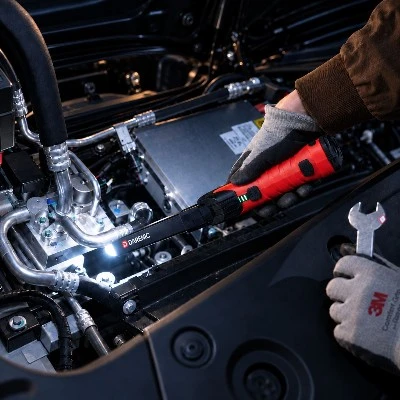
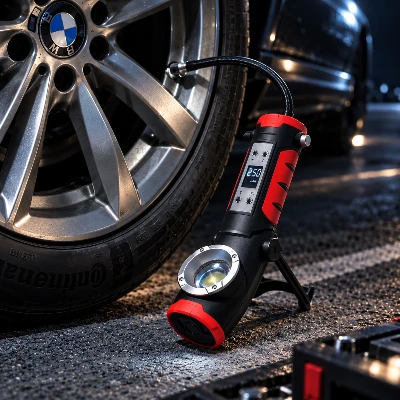
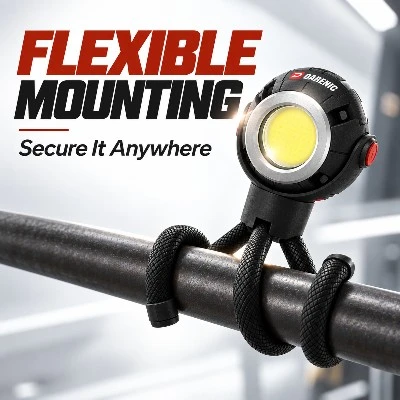
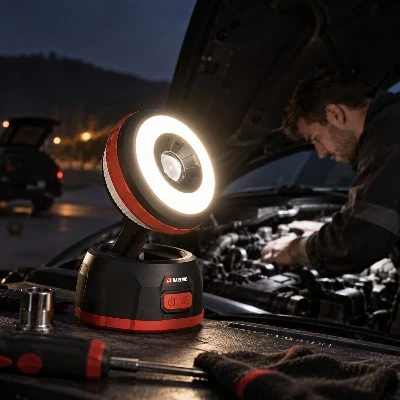
If you've ever needed to get up close and detailed work done-like checking spark plugs, wiring a car stereo, or inspecting plumbing lines-you know focused light is non-negotiable. That's where a Hand Held Inspection Light from our line shines (pun intended). Our handheld LED inspection lights have narrow, adjustable beams that let you light up tiny, hard-to-reach spaces without washing out the area around them. An incandescent inspection light would flood that tight space with light, making it hard to see fine details like frayed wires or corroded metal. That's a small difference that can save you hours of frustration, especially in jobs that need precision.
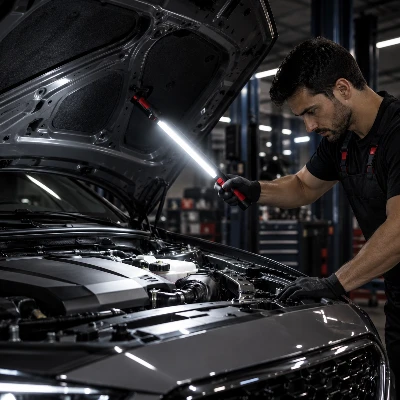
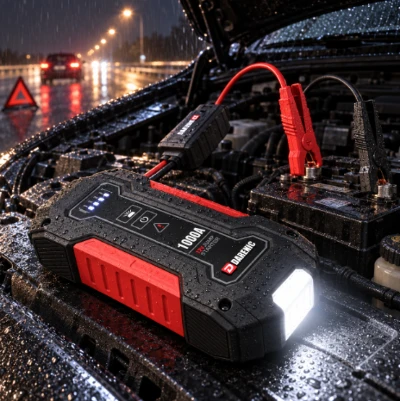
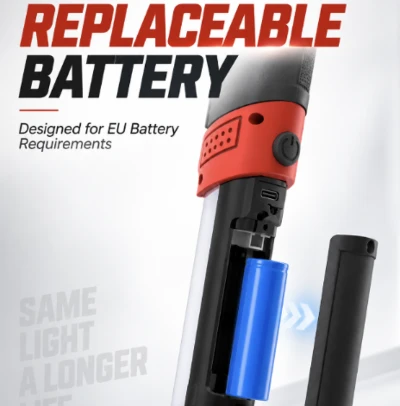
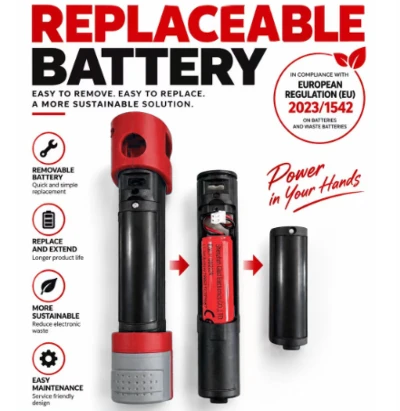
Next, battery life-this is where LED hand held work lights absolutely blow incandescents out of the water, especially if you're using a cordless model. Most traditional incandescent hand held work lights run on disposable batteries, like D or C cells, which die after 2-4 hours of use, often leaving you stranded mid-job. The heat from the filament also drains batteries faster, because the light has to work harder to keep the tungsten hot. LEDs, with their high efficiency, run way longer on the same amount of power. A typical rechargeable Hand Held Led Work Light from our line can run for 8-12 hours on a single charge, even at full brightness. Some of our smaller models, like the Hand Held Led Torch, can last up to 20 hours on low power, which is perfect for long nights on a job site or emergency repairs.
And if you're tired of buying disposable batteries every month, our Rechargeable Handheld Led Work Light and Hand Held Rechargeable Torch are game changers. They come with a built-in lithium-ion battery that charges in 3-4 hours, so you don't have to rummage through a junk drawer for dying D cells every time you need light. I've had customers tell me that switching to our rechargeable LEDs cut their battery costs by 70% in just the first year-saving them hundreds of dollars that can go back into their business.
Durability is another big one, especially for tradespeople who drop their tools, get them covered in oil and grease, or use them in harsh conditions like rain or dust. Incandescent work lights have a super fragile glass bulb that can shatter with a single drop on concrete. Once the bulb breaks, the filament is exposed, and the light is dead. The bulbs also burn out frequently-usually after 1,000-2,000 hours of use-so you're replacing them every few months. LEDs are built to take a beating. The semiconductor chip inside is solid-state, meaning there are no moving parts, no glass, no fragile filament to break. They're encased in tough, shatterproof plastic or aluminum, so they can withstand drops, bumps, and minor impacts. Most LEDs have a lifespan of 50,000 hours or more-that's 50 times longer than an incandescent bulb. To put that in perspective, if you use your work light for 2 hours a day, every day, an LED will last you 68 years. That's way longer than most people keep their work lights.
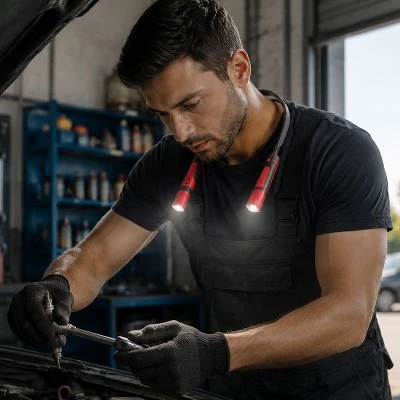
I've seen this first-hand with customers who switch. A mechanic I work with, who uses his work light daily to work on semi-trucks, told me he used to go through 3 incandescent work bulbs a year. Since he made the switch to our Hand Held Led Work Light two years ago, he hasn't replaced a single bulb. The unit got knocked off a lift last year, hit concrete, and only got a small scratch on the casing-still works like new. That kind of durability isn't just convenient; it's a huge cost saver for small business owners and independent tradespeople who can't afford to constantly buy new tools.
Heat is another factor that's often overlooked, but it can make a huge difference in comfort and safety on the job. As I mentioned earlier, incandescent bulbs get extremely hot-so hot that if you accidentally touch the bulb while it's on, you can get a serious burn. They also heat up the surrounding area, which is a problem in small, enclosed spaces like under a dashboard or in a tight crawlspace. LEDs run cool to the touch, even after hours of use. You can hold the light in your hand for as long as you need, and there's no risk of burns. That's not just more comfortable-it's safer. There's no chance of the light melting plastic parts on a car, or starting a fire if you leave it on for too long in a confined space.
Energy efficiency is another point that's worth talking about, even if you're not paying for your own electricity. Incandescent work lights waste 95% of the energy they use as heat, which means you're paying for a lot of energy that doesn't go toward light. LEDs use a fraction of that energy, so they're better for the environment and help reduce energy costs. For businesses that have multiple work lights running at once, that adds up. A job site with 10 incandescent work lights uses 500 watts of power total, while 10 LED work lights only use 100 watts-That's a huge difference in energy use over the course of a month.
Now, I know what some of you are thinking: "LEDs are expensive upfront, right? Are they worth the investment?" It's true that a good LED hand held work light costs a bit more than a basic incandescent model-usually $20-$50 more. But when you do the math, that extra cost pays for itself in a matter of months. Let's say you buy a $20 incandescent work light, and you replace the bulb once a year for 5 years. That's $100 in bulbs, plus the cost of disposable batteries every month-another $150 a year, or $750 over 5 years. The LED work light costs $80, and you never have to replace bulbs or buy disposable batteries. Over 5 years, that's a difference of almost $800. For small businesses, that's money that can be used for new tools, supplies, or employee wages.


There are a few common myths about LEDs that I want to clear up too. Some people think LEDs are not as bright as incandescents, but that's only true for cheap, low-quality LEDs. At our company, we engineer our Hand Held Led Work Lights to match or exceed the brightness of high-wattage incandescents, with adjustable brightness settings so you can dim them for longer battery life or crank them up for hard-to-see areas. Another myth is that LEDs give off a harsh, blue light that hurts your eyes. That's only for cheap LEDs that use low-quality semiconductors. Our lights use warm white LEDs, which produce a light that's similar to the yellow glow of incandescents, so it's easy on your eyes even after hours of use. We also test all our lights for color accuracy, so you can see details like paint color or metal finish clearly, which is important for jobs like body work or refinishing furniture.
Of course, incandescent lights aren't totally obsolete-they do have a small niche, like for temporary outdoor lighting where you don't need a focused beam. But for handheld work lights, which are used for detailed, close-up work in tight spaces, LED is clearly the better choice. I've talked to many tradespeople who stuck with incandescents for years, skeptical about the new LED technology, but once they tried a good LED hand held work light, they never went back. The longer battery life, durability, and brighter focused light made their jobs easier and their work faster.
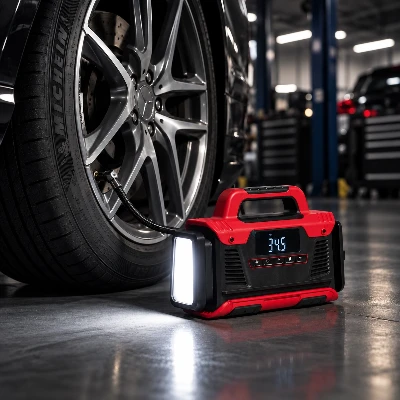
If you're ready to make the switch, or if you have more questions about how our lights work, our team is here to help. We've worked with auto mechanics, construction crews, HVAC technicians, and DIY enthusiasts to find the right light for their specific needs. Whether you're looking for a compact Hand Held Inspection Light for small engine work, a heavy-duty Hand Held Led Work Light for construction sites, or a rechargeable model for long jobs, we have options that fit every budget and job.
At the end of the day, a work light is one of those tools that you don't think about until you need it-and when you're in a dark garage at 10 PM, trying to fix a broken car part, you want a light that works as hard as you do. Incandescent lights have served us well for over a century, but LED technology has redefined what a hand held work light can be: brighter, longer-lasting, safer, and more cost-effective. Making the switch isn't just an upgrade-it's a change that will make your work easier, safer, and more efficient every single day.
If you're ready to compare our LED hand held work lights for your next project, or want to learn more about how they can fit into your workflow, reach out to our team to discuss your needs. We can help you find the right light that matches your job requirements and budget.
References:
- U.S. Department of Energy. (2022). Lighting Technology Fact Sheet: Light Emitting Diodes (LEDs). Retrieved from energy.gov
- Illuminating Engineering Society. (2021). "Performance Metrics for Handheld Work Lights." Journal of Illuminating Engineering Society, vol. 49, no. 2, pp. 112-125
- National Institute for Occupational Safety and Health (NIOSH). (2020). "Workplace Lighting: Effects of Light Type on Safety and Productivity." Retrieved from cdc.gov/niosh
- Lighting Research Center. (2023). "Lifespan and Energy Efficiency Comparison of Incandescent and LED Lighting." Rensselaer Polytechnic Institute.
Send Inquiry