
Introduction to Lithium Batteries
1) what is a lithium battery?
A lithium battery is a rechargeable battery with lithium metal or lithium compounds as its main active materials. It works by storing and releasing energy through electronic chemical reactions.
In short, a lithium battery can be charged and discharged many times. It’s lighter and smaller than regular battery(dry battery, lead-acid battery etc), but can stores more energy.
2) what types of lithium batteries are commonly used?
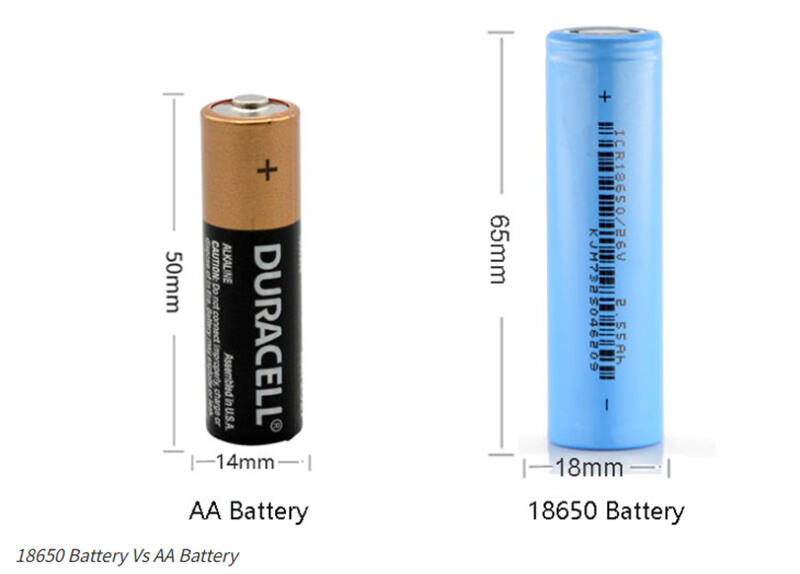
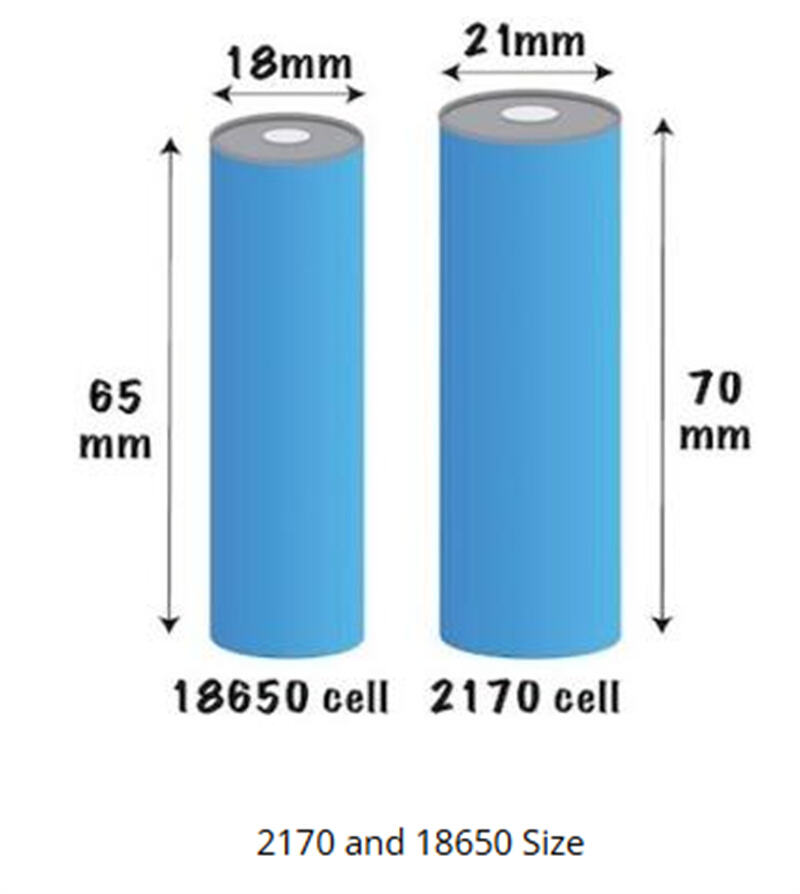
Here are some common types of lithium batteries used in LED work light: 18650,21700,14500,16500. These numbers represent the battery’s diameter, height, and shape. For example, in 18650: 18 means an 18 mm diameter, 65 means a 65 mm height, and 0 indicates a cylindrical shape.
3) how do lithium batteries influence brightness,runtime and product performance?
Impact on Brightness
The voltage and discharge capability provided by a lithium battery determine how much power the bulb or LED can deliver.
· Batteries with high discharge capability → produce brighter light, especially in high-brightness mode.
· If the battery capacity is insufficient or the discharge is unstable → the light may dim or flicker.
Impact on Runtime (Battery Life)
Higher capacity (mAh) → allows the light to run longer.
At the same brightness, a high-capacity lithium battery lasts longer than a low-capacity one.
High-brightness mode consumes more power, requiring higher capacity or multiple batteries for extended use.
Impact on Overall Product Performance
Battery size and weight affect the lamp’s design and portability.
· For example, a 21700 battery has a larger capacity than an 18650 but is slightly bigger, requiring compatible lamp design.
Discharge stability affects the reliability and user experience of the light.
· An unstable battery may cause flickering or early shutdown.
Battery lifespan influences after-sales costs and user satisfaction.
· Longer battery life → longer product usage cycle → higher customer satisfaction.
Introduction to Commonly Used Lithium Batteries
1) 18650
Size: 18 mm diameter × 65 mm height
Capacity: Usually 1800–3500 mAh
Features:
Mature technology, stable supply
Moderate price, good value for money
Stable discharge, suitable for medium-power devices
Typical Uses:
Handheld work lights, headlamps
Small to medium tool lights
Portable charging devices
Notes:
Capacity is generally medium, may be a bit low for long runtime in high-brightness mode
2)21700
Size: 21 mm diameter × 70 mm height
Capacity: Usually 4000–5000 mAh
Features:
Higher capacity, longer runtime
Strong discharge, minimal brightness drop in high mode
Stable and suitable for continuous high-power use
Typical Uses:
High-brightness floodlights
Professional-grade work lights
Portable lights used continuously for long periods
Notes:
Bigger than 18650, requires compatible lamp design
More expensive than 18650
3)14500
Size: 14 mm diameter × 50 mm height
Capacity: Usually 600–1000 mAh
Features:
Small and lightweight
Suitable for tiny portable devices
Mature technology, low cost
Typical Uses:
Mini flashlights, pocket lights
Small work lights
Entry-level portable devices
Notes:
Small capacity, limited brightness and runtime
Not suitable for high-power, long-duration use
4)16500
Size: 16 mm diameter × 50 mm height
Capacity: Usually 1000–2000 mAh
Features:
Between 14500 and 18650 in size and capacity
Can provide more capacity than 14500 in compact devices
Good for custom or special-structure products
Typical Uses:
Custom handheld lights
Work lights with special structures
Notes:
Less common on the market, make sure supply is stable
Capacity and discharge are limited, not suitable for high-power large lights
Key Performance Comparison Between Different Batteries
1)Capacity
Determines how much energy a battery can store. In general, the larger the capacity, the longer the light can run.
Typical capacity comparison:
14500: 600–1000 mAh
16500: 1000–2000 mAh
18650: 1800–3500 mAh
21700: 4000–5000 mAh
2)Discharge Ability / Stability
Determines whether the light can maintain stable output in high-brightness mode. Batteries with higher discharge ability → more stable light, no flickering.
Discharge strength under the same conditions:
21700 > 18650 > 16500 > 14500
3)Size & Weight
Affects product design, portability, and feel. The larger the capacity, the bigger and heavier the battery.
Under the same conditions:
14500: smallest and lightest, ideal for mini lights
21700: largest and heaviest, ideal for high-brightness, long-runtime lights
4)Lifespan
Measured by charge-discharge cycles, determines product durability.
Most lithium batteries: 300–1000+ cycles
High-quality 21700 / 18650 usually last longer
5)Energy Density
Amount of energy stored per unit of weight or volume.
Higher energy density → more power in the same size or weight.
Energy density ranking: 21700 > 18650 > 16500 > 14500
6)Cost
Affects purchasing budget. Supply maturity affects stable delivery.
Ranking:
Low cost, mature supply: 18650, 14500
Higher cost, less supply: 21700, 16500
Product Positioning for Different Battery Types
1)14500 – Small & Portable
Positioning: Miniature, lightweight, entry-level products
Typical Products:
Mini flashlights
Pocket lamps
Small portable lights
Advantages: Easy to carry, low cost
Limitations: Low capacity, short runtime, not suitable for high-brightness or long-use scenarios
2)16500 – Compact & Customizable
Positioning: Mid-size, for devices with space limitations or custom designs
Typical Products:
Custom handheld lights
Special structure work lights
Advantages: Balance between size and capacity
Limitations: Market less common, supply may be less stable, moderate capacity
3)18650 – Standard & Reliable
Positioning: Mature, cost-effective, widely used in medium-power devices
Typical Products:
Handheld work lights
Headlamps
Mid-power tools and lamps
Advantages: Stable performance, good price, supply chain mature
Limitations: Capacity medium, may be insufficient for long high-brightness usage
4)21700 – High Power & Long Runtime
Positioning: High-capacity, professional, for high-brightness and long-duration devices
Typical Products:
High-brightness floodlights
Professional work lights
Long continuous-use lamps
Advantages: High capacity, stable discharge, long runtime
Limitations: Larger size, heavier, higher cost
Common Misconceptions About Lithium Batteries
1)Same size means interchangeable
Common misconception: If the battery is the same size, it can be directly swapped.
The truth: Even if the shape looks the same, different models or brands may have different capacity, discharge ability, or protection circuits. Direct replacement can affect brightness, runtime, and even pose safety risks.
2)Bigger capacity is always better
Common misconception: The bigger the capacity, the better the battery.
The truth: Higher capacity extends runtime, but also increases size and weight. It may not fit portable devices or existing lamp designs. When choosing batteries, consider the usage scenario and product design.
3)All lithium batteries can run on high brightness for a long time
Common misconception: Any lithium battery can maintain high brightness for a long period.
The truth: High-brightness mode consumes power quickly. You need a battery with high capacity and strong discharge ability, otherwise the light will dim fast or shut off early.
4)Lithium batteries and dry batteries can be mixed
Common misconception: Different types of batteries can be used interchangeably.
The truth: Lithium batteries usually have higher voltage than standard alkaline batteries. Direct replacement may damage the light or affect its performance.
5)Cheap lithium batteries last long too
Common misconception: Low-cost batteries offer good value and long life.
The truth: Cheap, low-quality batteries may have unstable capacity, weak discharge ability, short cycle life, and potential safety risks. It’s recommended to choose certified batteries from reliable suppliers.
Suggestions for Purchasing LED Work Lights
1)Define the Usage Scenario First
Different scenarios have different requirements:
Daily maintenance / Home use: medium brightness, lightweight
Professional construction / Job sites: high brightness, durable, high protection level
Outdoor / long-time lighting: large-capacity lithium battery, power bank function
Emergency backup lighting: fast charging, long runtime
Tips:ask these three questions before purchasing:
Where will it be used?
How long does it need to stay on?
Is portability important?
2)Choose the Right Battery Type — Bigger Is Not Always Better
The battery directly affects brightness, runtime, and product size.
| Battery Type | Positioning | Advantages |
| 14500 | Mini & portable | Lightweight, low cost |
| 16500 | Special structure | Compact size, medium capacity |
| 18650 | Mainstream & stable | Mature supply, good value |
| 21700 | High brightness & long runtime | Large capacity, stable discharge |
Tip: Match the battery to the brightness and runtime requirements.
The best choice is not the biggest battery, but the most suitable one.
3)Understand What “Brightness Data” Really Means
Lumens (lm): a brightness indicator, but higher is not always better
Look at tested brightness, beam uniformity, and heat dissipation design
Color temperature:
Cool white → better for work lighting
Warm white → softer and more comfortable
LED chip & optical design: directly affect efficiency and lifespan
Tip: Check real test data and customer feedback, not just claimed specs.
4)Battery & Protection Circuit Must Be Reliable
Safety protections: overcharge, over-discharge, short-circuit protection
Certifications: CE / RoHS / UN38.3 / MSDS offer better assurance
Branded cells vs unbranded cells: branded cells are usually more stable and safer
Tip: Prioritize products with safety certifications and proper protection circuits.
5)Runtime & Charging Design
Consider real usage needs:
Does it support fast charging?
USB charging / car charging / external power supported?
Charging indicator or battery level display available?
Tip: For long-time lighting, large capacity + multiple charging options is the best choice.
6)Ergonomics & Portability
Handles, hooks, and magnetic bases improve usability
Foldable angles or adjustable heads increase lighting flexibility
Easy-to-carry designs help with quick on-site use
7)After-Sales Support & Product Reliability
Warranty period and after-sales policy
Batch test reports or factory inspection records
Customization support: logo, packaging, color
Tip: For long-term cooperation, after-sales support and consistency matter more than one-time price.
Quick Purchasing Checklist
A. Have you selected the battery type based on the usage scenario?
B. Is brightness supported by real test data?
C. Are the battery and protection circuit safe and reliable?
D. Do runtime and charging options match real needs?
E. Are certifications and after-sales support in place?
Conclusion
Overall, lithium batteries are one of the core components of LED work lights. Their type and performance directly determine brightness, runtime, size, reliability, and overall user experience.
Different lithium battery models have their own strengths in terms of capacity, discharge capability, size and weight, and cost, making them suitable for different product positioning and usage scenarios.
For buyers, choosing an LED work light should not be based on a single parameter or price alone. Instead, it is important to consider real usage needs, product design, safety certifications, as well as long-term supply stability and after-sales support, in order to select the most suitable battery solution.
Only when the battery selection matches the product positioning can the best balance between performance, cost, and user experience be achieved.